Futures expiration and rollover, for day traders
Equity index futures like ES and NQ expire four times a year, in March, June, September and December, and stop trading at 9:30 AM New York time on the third Friday of the contract month. Before that, traders roll to the next quarter, so volume and your platform's default contract move ahead about a week or two before expiration.
Reading the contract code
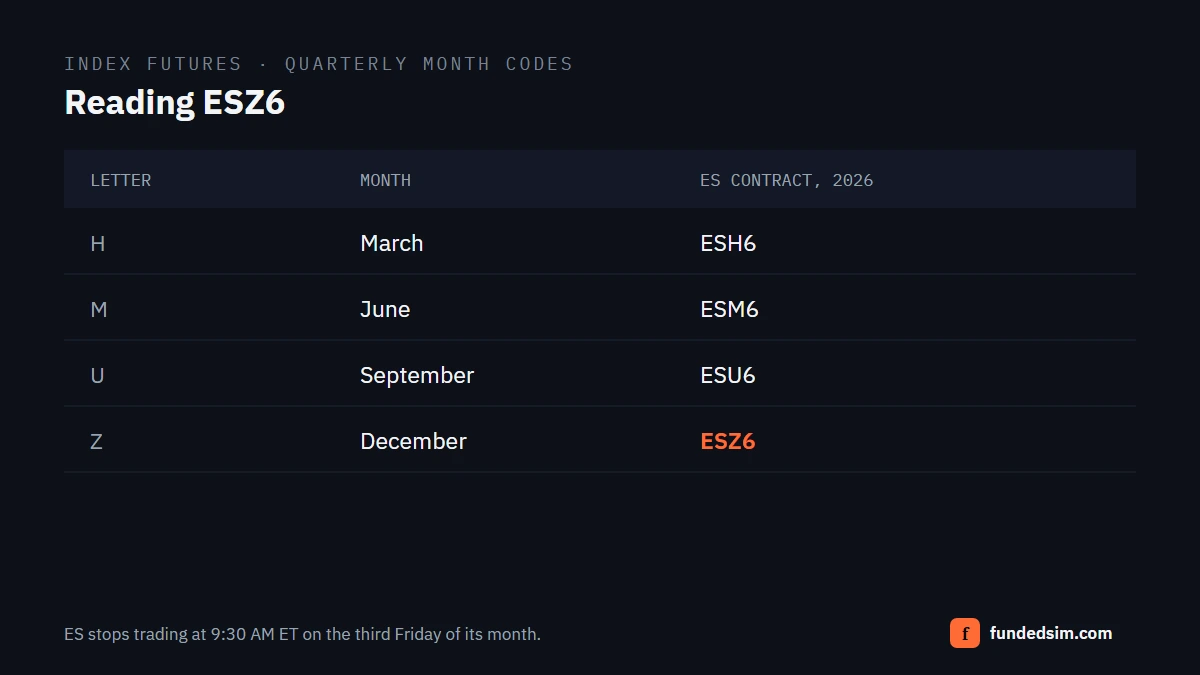
A futures symbol is the product, a month letter and a year digit. ESZ6 is the E-mini S&P 500, December (Z), 2026. The quarterly letters you'll see on index futures:
| Letter | Month |
|---|---|
| H | March |
| M | June |
| U | September |
| Z | December |
When it ends
CME lists ES as quarterly contracts and stops trading each one at 9:30 AM ET on the third Friday of its month. The contract is financially settled: nobody delivers anything, positions are closed at the settlement value.
As a day trader you don't want to be in the expiring contract during its last days anyway. Volume thins out and spreads can widen while everyone moves to the next quarter.
The roll
"Rolling" just means switching from the expiring contract to the next one. Volume usually shifts over in the week or so before expiration, and most platforms switch their front-month chart at the same time. What changes for you:
- Prices jump between contracts. The next quarter trades at a slightly different price, so levels from last week's chart may sit at different numbers on the new contract. A continuous chart smooths this over; a single-contract chart doesn't.
- Check the symbol you're trading. If your platform still has the old contract loaded, you could be trading the thin one.
In a prop firm account
Prop firms trade the same exchange contracts, so the roll happens for you too. Most firms close you out by their daily deadline anyway, so you rarely carry a position across the roll. The practical risk is the chart: make sure your levels and your order ticket point at the same contract month.
Blow it here, not on a paid eval
Run the same rules on your own trades in the simulator. Free, no card, and a blown account costs you nothing but pride.
Start practicing