How to test a trading strategy before you pay for an eval
Write the strategy as rules someone else could follow, test it on enough trades to mean something (dozens, ideally more), include commissions and slippage, and then run it under the exact drawdown and daily loss limit of the account you plan to buy. A strategy that makes money but breaks the eval's rules still fails the eval.
1. Write it down as rules
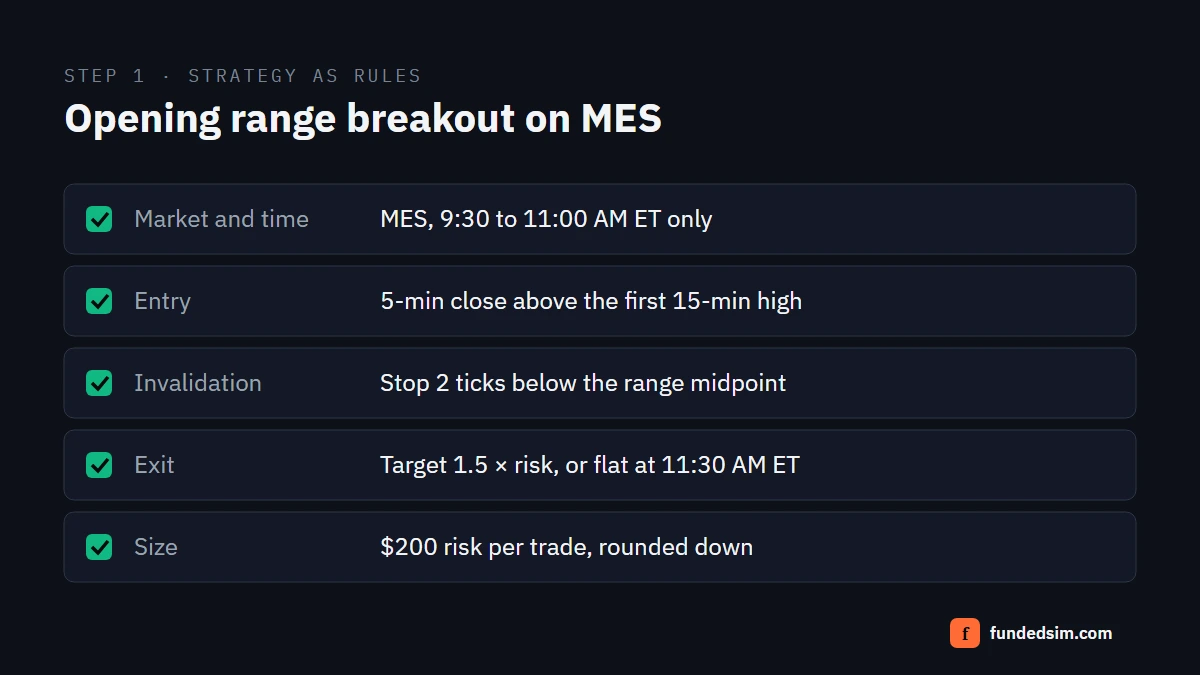
If two traders read your rules and take different trades, they aren't rules yet. Each needs:
- Market and time: which contract, which session hours.
- Entry: the exact condition, not "when it looks strong".
- Invalidation: where the idea is wrong, which is your stop.
- Exit: target, trailing stop or time-based exit.
- Size: fixed risk in dollars per trade.
2. Get enough trades
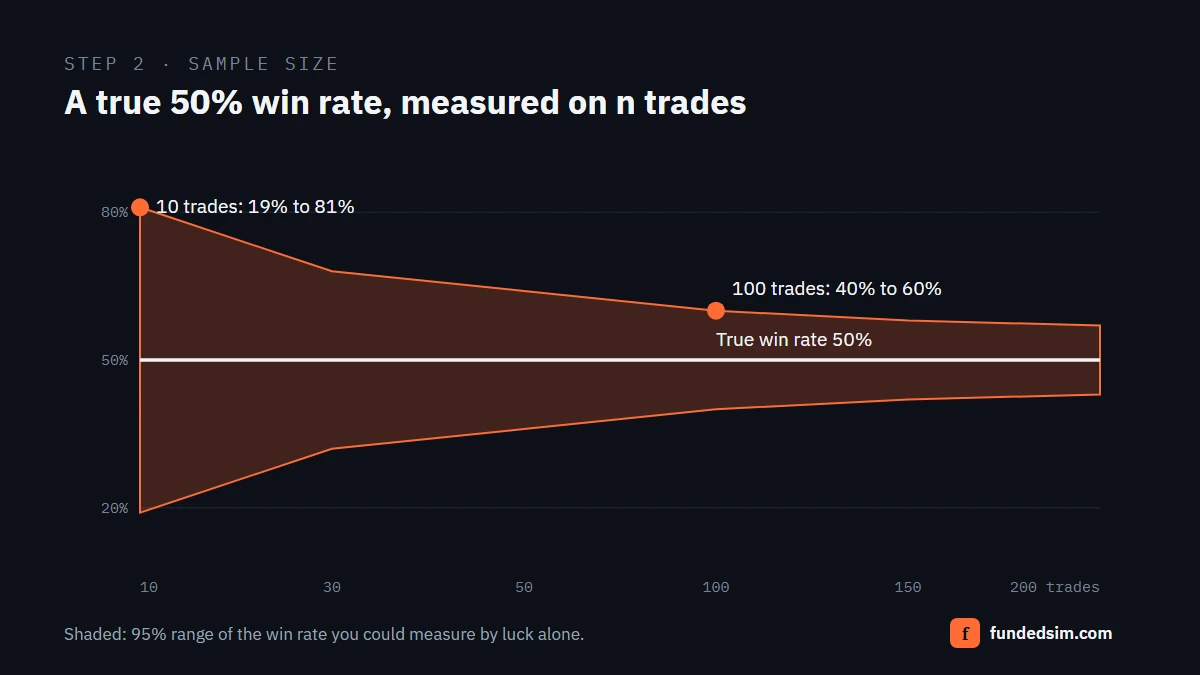
Ten trades tell you almost nothing. With a few dozen you start to see the shape; with a hundred or more you can start trusting the win rate and expectancy. Results from one week of a trending market won't hold in a range.
3. Include the costs
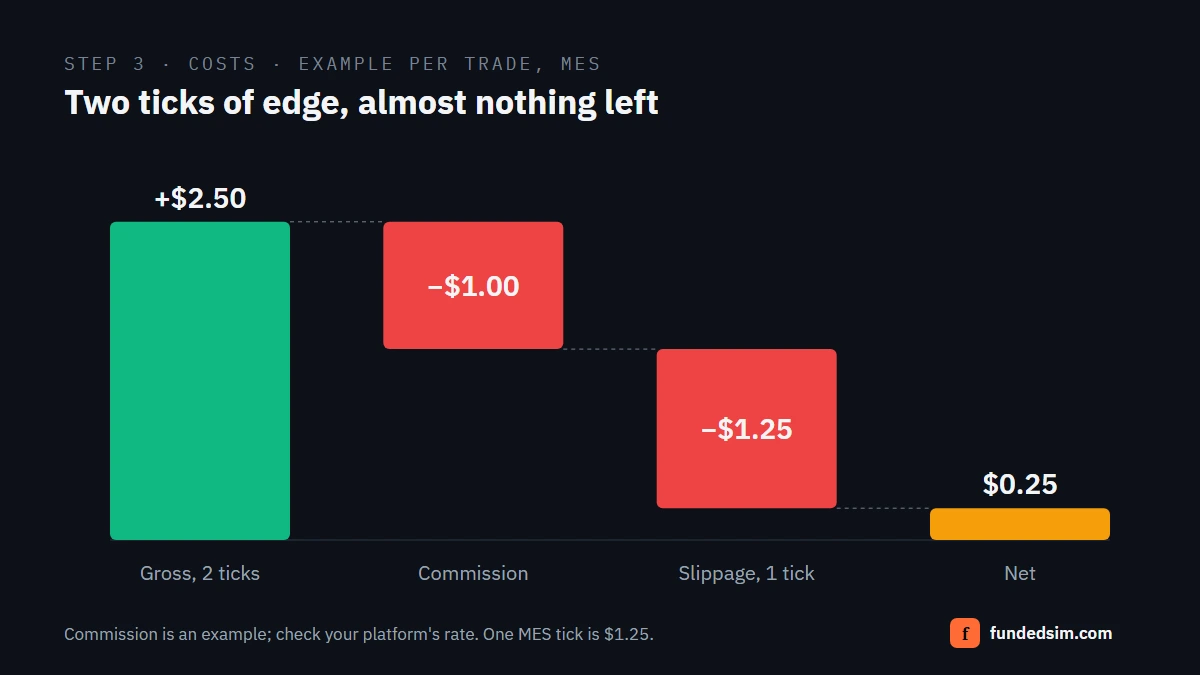
Subtract commissions on every round turn and add a tick of slippage to stop fills. A strategy that makes two ticks per trade on MES can disappear once fees and slippage come out.
4. Run it under eval rules
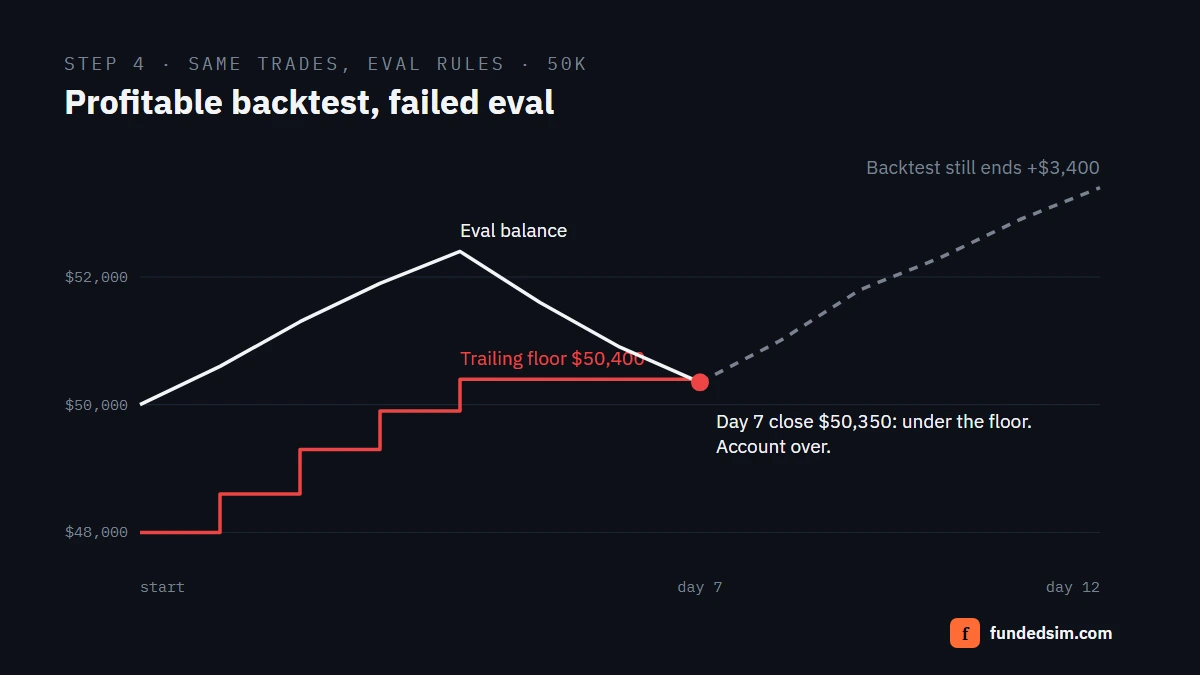
This is the step backtests usually skip. A strategy can be profitable and still fail an eval, because:
- its worst day is bigger than the daily loss limit,
- its losing streaks are deeper than the trailing drawdown,
- its best day is too large a share of the profit for a consistency rule.
Take your trade list and play it through the account rules day by day. The simulator does this for Apex and Topstep accounts: log the trades and see whether the account survives.
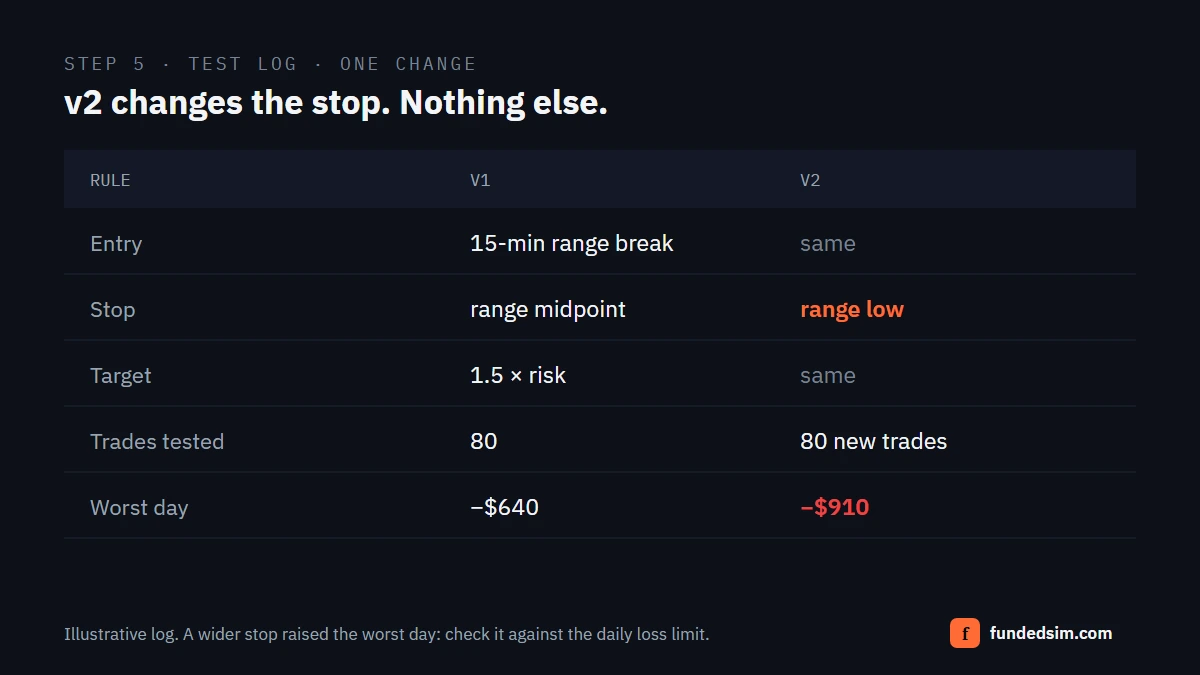
5. Change one thing at a time
If you tweak the stop, the target and the entry at once and the result improves, you don't know why. Worse, you may have fitted the rules to this sample. Change one rule, test it on new trades, and keep a note of what you changed.
What this won't tell you
No test tells you what the next hundred trades will do. It tells you whether the idea held up on the trades you had, under the rules you'll face. That's the bar to clear before paying, not a promise beyond it.
Blow it here, not on a paid eval
Run the same rules on your own trades in the simulator. Free, no card, and a blown account costs you nothing but pride.
Start practicing